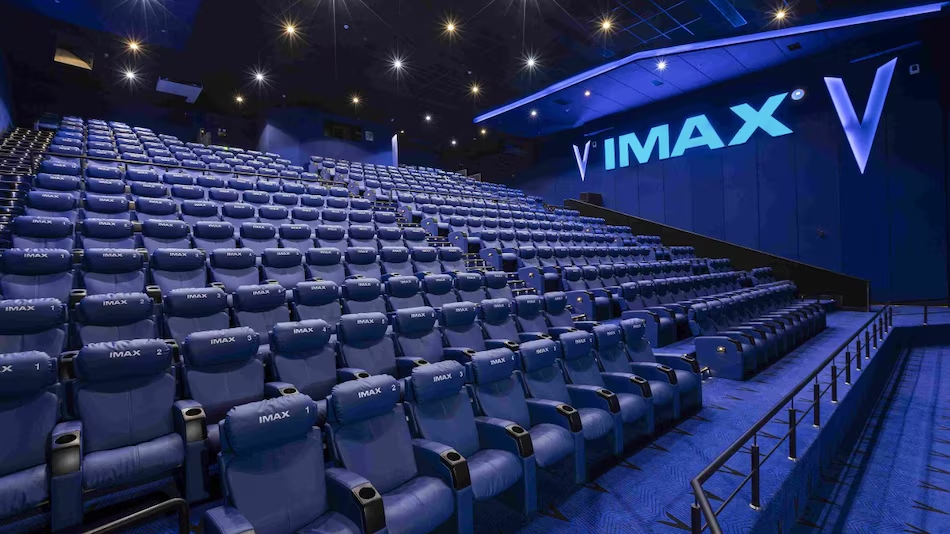
Movie tickets are quite expensive these days. During the opening weekend of a major blockbuster, prices can easily exceed 1,000 rupees per ticket, depending on the cinema and the screening format. Anyone who recently caught the massive “Barbenheimer” phenomenon of 2023—especially those who watched Oppenheimer in an IMAX theater—knows just how steep that cost can be, and that’s not even counting the price of popcorn or other snacks.
While high ticket prices are typically associated with large cinema chains, many major Indian cities also offer more budget-friendly alternatives. If you’d rather not shell out a fortune for a movie ticket, you certainly don’t have to. I decided to watch both Barbie and Oppenheimer over the course of two weekends, trying out both types of venues. Interestingly, I found that spending a little extra might actually be worth it—let me explain why.
Watching Barbie at an Affordable Cinema
I decided to catch Barbie—Greta Gerwig’s film—at an old, partially modernized multiplex in Mumbai. The “modernization” consisted of converting what was once a single-screen theater into a three-screen venue with a slightly more refined interior. There’s still a touch of nostalgia here; the concession stand looks exactly as it did back in my college days, selling the same sandwiches and popcorn at very reasonable prices.
However, the cinema has clearly failed to keep pace with the times, lacking upgrades to its projectors, screen sizes, and seating. Even for a two-hour film, the seats were rather uncomfortable, and the screen was pitifully small—honestly, watching on a 43-inch TV in one’s own living room would be better. The projection was blurry and lacked clarity, making for a disappointing overall viewing experience. While the film itself was watchable, I came away feeling let down by the experience as a whole.
Many people might not be too bothered by these technical shortcomings; after all, the primary reason to go to the cinema is to watch the movie, and the affordable ticket prices and snacks certainly make the outing more pleasant. On that Friday night, I paid 270 rupees for my ticket, and we spent about 300 rupees per person on a generous helping of snacks.
Watching Oppenheimer in IMAX
“Experience Oppenheimer through the eyes of Christopher Nolan” was a prominent rallying cry leading up to the film’s release, and Universal Pictures spared no effort to ensure it would be screened on IMAX screens—both in India and across the globe. Gautam Dutta, Co-CEO of PVR Inox Ltd., remarked: “A film like Oppenheimer is best experienced on an IMAX screen; it delivers a deeply immersive and powerful impact. Furthermore, there is a specific vantage point from which the viewing experience is even better—this is the very spot the director himself would choose to sit.”
I watched this film at one of the few IMAX theaters in Mumbai—arguably one of the best in the city following the closure of the iconic IMAX dome theater in Wadala. It is a modern multiplex featuring state-of-the-art large screens (including the massive IMAX screen where I saw the movie), laser projection technology, and comfortable seating.
The seating is arranged at varying heights, ensuring that the audience in front of you won’t obstruct your view; furthermore, as long as you aren’t sitting too close to the screen, you won’t have to strain your neck to watch. The viewing experience from the sides of the theater is also nearly as good as it is from the center. Without a doubt, the technical quality of this screening far surpassed the outdated technology I encountered when watching Barbie at a different cinema.
However, this technically superior viewing experience comes with a steep price tag. Tickets for Saturday morning screenings can exceed 1,000 rupees each, while more popular evening showtimes command even higher prices—around 1,400 rupees per ticket. For perspective, a full month’s subscription to Netflix’s premium tier costs less than a single movie ticket.
Snack prices are also exorbitant; a large tub of popcorn costs 510 rupees—and that’s before even accounting for the lunch I’d still need to eat later. Such high prices for snacks are truly unjustifiable, yet they are presented as part of the “premium” experience—and, of course, there’s simply no other option if you want a bite to eat or a drink during the intermission.
Better Experiences Come at a Higher Price
After experiencing these two vastly different ways of watching movies in a theater, I’ve come to believe that spending a bit more for a superior viewing experience is well worth it. As an avid user of streaming services and a TV reviewer for Gadgets 360, I’m accustomed to watching high-quality content on a large-screen television at home. Consequently, I tend to reserve trips to the cinema for only the most significant films—those that truly demand the unique, immersive impact of a massive theater screen.
While an IMAX experience can cost several times more than a standard cinema ticket—especially when you factor in concessions—the superior technical performance makes it well worth the investment. If you’re a weekly moviegoer, these costs can certainly add up. However, if you only visit the theater occasionally, my advice is to choose a high-quality venue—ideally an IMAX—and treat yourself to the best possible experience. And if you’re looking to save some money, simply skip the overpriced popcorn.
At its annual developer conference, Apple unveiled its first mixed-reality headset, the Apple Vision Pro, alongside new Mac models and upcoming software updates. In this episode of Orbital, the Gadgets 360 podcast, we break down all the major announcements from WWDC 2023. You can find Orbital on Spotify, Gaana, JioSaavn, Google Podcasts, Apple Podcasts, Amazon Music, or wherever you prefer to listen to your podcasts.